

One thing we’ve learned from working on furniture projects is that good sourcing isn’t just about finding the best price.
It’s about choosing the right materials, understanding how furniture is made, and working with suppliers who can deliver what they promise.
We’ll share practical advice on furniture sourcing for interior designers for finding reliable suppliers, comparing costs, choosing between custom and ready-made, and avoiding common mistakes that can delay your project.
Interior Designer Furniture Sourcing Guide
What Is Furniture Sourcing in Interior Design?
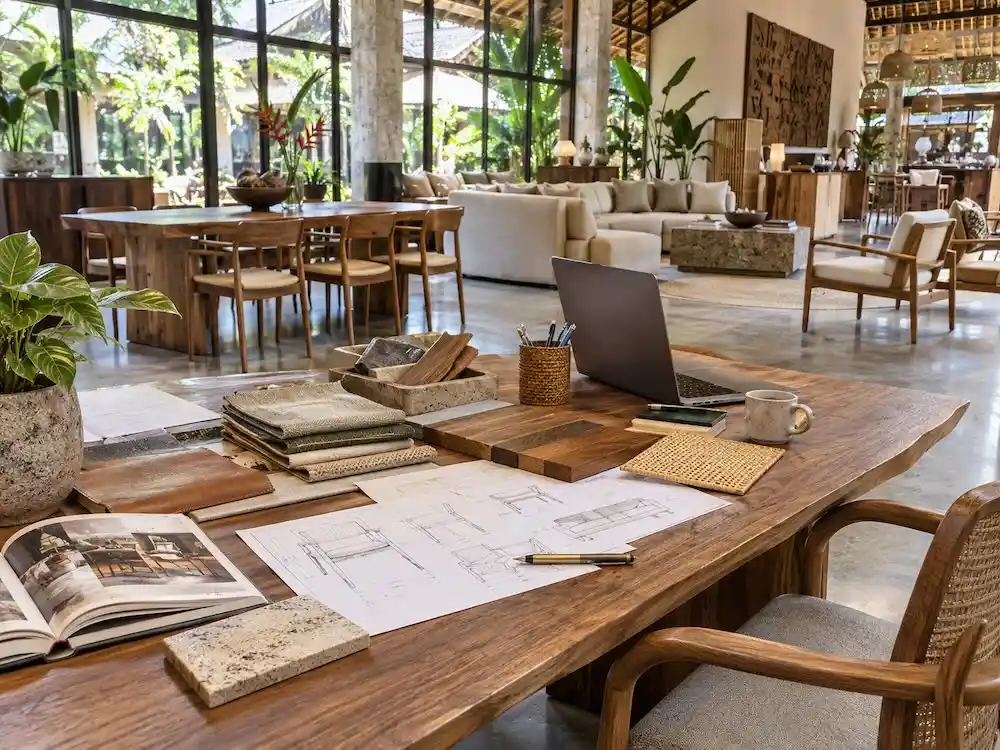
Furniture sourcing is the process of finding, selecting, and purchasing furniture for an interior design project.
It involves researching suppliers, comparing products, choosing materials, requesting quotes, and making sure everything fits the project’s design, budget, and timeline.
For interior designers, this can mean anything from finding a particular dining chair for a private villa to ordering hundreds of custom-made pieces for a hotel or resort.
In 2026, the furniture sourcing process typically involves:
- Finding suitable suppliers: Researching furniture manufacturers, wholesalers, and retailers that match the project’s requirements.
- Selecting furniture: Choosing pieces based on design, dimensions, materials, and how they’ll be used.
- Comparing prices: Requesting quotations and making sure furniture costs fit within the project budget.
- Checking quality: Reviewing material samples, product specifications, and manufacturing standards.
- Managing orders and delivery: Confirming production timelines, coordinating shipping, and making sure everything arrives as expected.
While the process might sound straightforward, furniture sourcing for interior designers often involves more than simply finding attractive pieces.
Projects may require specific dimensions, matching finishes, commercial-grade materials, and consistent quality across multiple orders.
Having the right suppliers makes managing these requirements considerably easier.
Where Do Interior Designers Source Their Furniture?
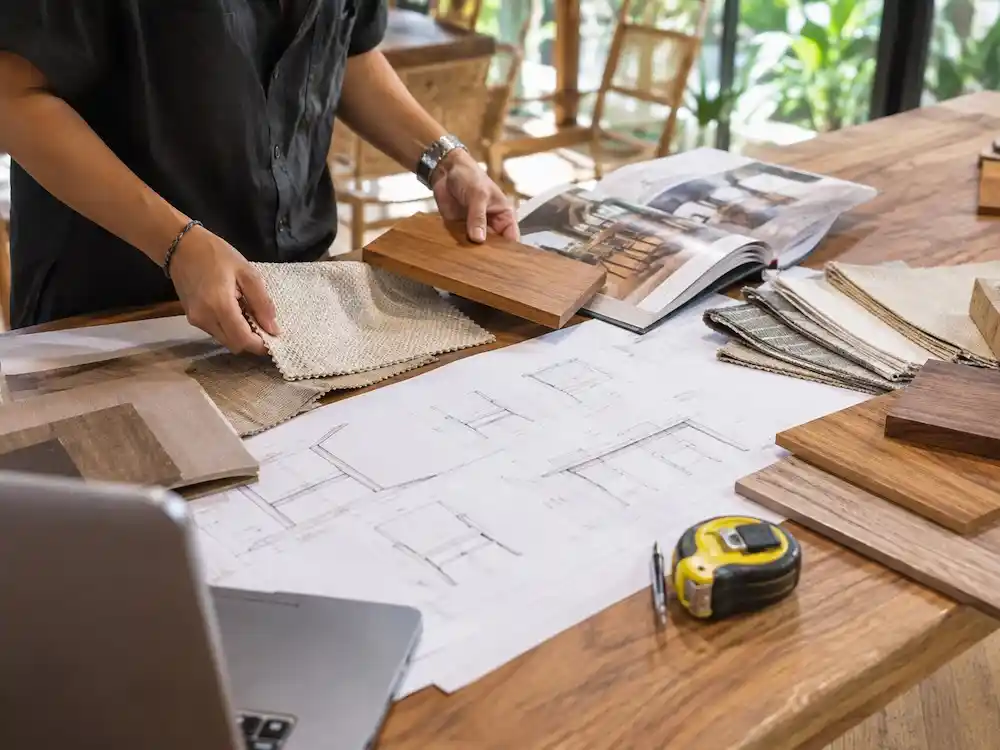
Interior designers source furniture from manufacturers, wholesalers, showrooms, online marketplaces, and independent workshops.
The best option depends on the project’s budget, design requirements, order quantities, and delivery timeline.
Here are the five most common furniture sourcing options in 2026 and when each makes sense.
1. Furniture Manufacturers
Working directly with manufacturers gives interior designers more control over how furniture is made, particularly for custom projects.
- Best for: Hotels, resorts, luxury villas, restaurants, and larger residential projects.
- Main advantages: Custom dimensions, materials, finishes, and the ability to produce matching furniture in larger quantities.
- Things to consider: Production lead times, minimum order quantities, and shipping arrangements.
For designers who already have technical drawings or a clear design concept, manufacturers can produce furniture specifically for the project rather than relying on existing collections.
2. Wholesale Furniture Suppliers
Wholesalers offer ready-made furniture in larger quantities, often at trade prices. They’re a practical choice when designers need multiple pieces without waiting for custom production.
- Best for: Projects requiring standard furniture designs or shorter delivery times.
- Main advantages: Competitive bulk pricing, established product collections, and available stock.
- Things to consider: Limited customization and varying minimum order requirements.
3. Furniture Showrooms and Brands
Showrooms are useful when designers want to inspect furniture in person before purchasing. Many established brands also offer trade accounts with professional discounts.
- Best for: Residential interiors, smaller projects, and individual statement pieces.
- Main advantages: Physical product inspections, established collections, and straightforward ordering.
- Things to consider: Higher retail pricing and limited flexibility with dimensions or finishes.
4. Online Furniture Marketplaces
Platforms like Alibaba and Archiproducts allow interior designers to browse furniture collections and connect with suppliers internationally.
- Best for: Discovering new suppliers, comparing designs, and researching furniture options.
- Main advantages: Large product selections, international supplier access, and easy price comparisons.
- Things to consider: Differences in product quality, supplier reliability, and shipping costs.
Online sourcing is convenient, but it’s worth requesting material samples and checking supplier credentials before committing to larger orders.
5. Local Artisans and Workshops
Independent workshops are often a good choice for handcrafted furniture, unusual designs, or pieces requiring traditional techniques.
- Best for: Bespoke furniture, decorative pieces, and smaller custom orders.
- Main advantages: Personal craftsmanship, design flexibility, and access to specialist skills.
- Things to consider: Limited production capacity and potentially longer timelines for larger orders.
Which Furniture Sourcing Option Is Best?
| Sourcing | Customization | Large orders | Ready-made options |
|---|---|---|---|
| Manufacturers | High | Excellent | Sometimes |
| Wholesalers | Limited | Excellent | Yes |
| Showrooms & brands | Limited | Varies | Yes |
| Online marketplaces | Varies | Varies | Yes |
| Local workshops | High | Limited | Sometimes |
Most interior designers use a combination of these options.
For example, a designer might source custom bedroom furniture directly from a manufacturer, purchase lighting from an established brand, and commission decorative pieces from a local workshop.
The goal isn’t to find one supplier for everything. It’s to choose the right sourcing method for each part of the project.
Best Countries to Source Furniture for Interior Design Projects
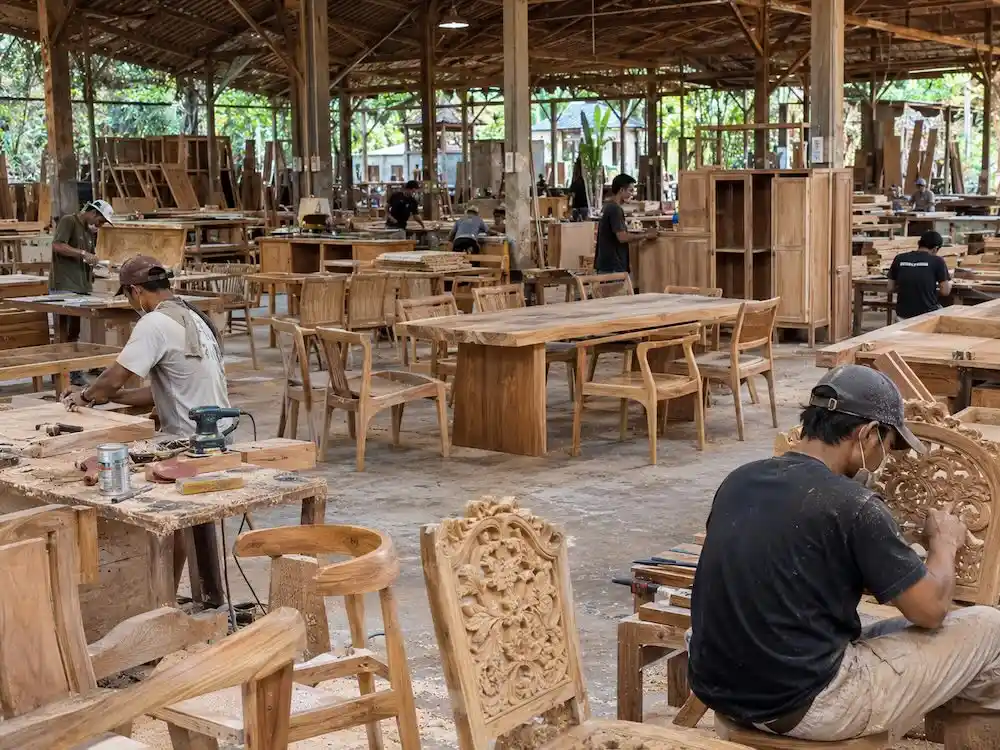
When sourcing furniture internationally, different countries offer different advantages in terms of materials, craftsmanship, pricing, and manufacturing capabilities.
Some specialize in custom wooden furniture, while others are better suited to large-scale production or luxury designer collections.
Here are six popular countries for international furniture sourcing in 2026:
| Country | Best For | Advantages |
|---|---|---|
| Indonesia | Custom furniture, teak, rattan, hospitality projects | Skilled craftsmanship, natural materials, flexible customization |
| China | Mass production, contemporary furniture | Competitive pricing, large manufacturing capacity |
| Vietnam | Wooden furniture, upholstery, bulk orders | Established export industry, consistent large-scale production |
| Italy | Luxury furniture, designer collections | Premium craftsmanship, internationally recognized brands |
| India | Handcrafted furniture, carved wood, decorative pieces | Traditional craftsmanship, distinctive designs |
| Turkey | Sofas, upholstered furniture, modern collections | Strong upholstery industry, access to European markets |
How to Choose the Right Country for Furniture Sourcing
The best furniture sourcing destination depends on your project requirements rather than price alone.
For example, Indonesia is well suited to custom furniture manufacturing, especially for interior designers working on luxury villas, hotels, and resorts. Its established woodworking industry and access to materials such as teak and rattan make it a popular choice for bespoke furniture.
China and Vietnam are worth considering for larger production orders, while Italy is often preferred for luxury designer collections. India and Turkey offer their own strengths in handcrafted and upholstered furniture.
Planning to source furniture from Indonesia? Drawing on our experience working with international clients, we’ve put together a practical guide on How to Import Furniture from Indonesia, covering shipping, customs, import duties, and the costs you should understand before placing an order.
💡 Remember: Successful furniture sourcing for interior designers comes down to finding a manufacturer that can meet your design specifications, quality expectations, budget, and delivery timeline, regardless of where they’re based.
🔗 For designers considering Indonesian manufacturers, the Ministry of Trade’s INAexport platform is also a useful official resource for understanding how international buyers can connect with Indonesian exporters.
How to Source Furniture for Interior Design Projects

Good furniture sourcing for interior designers starts with a clear plan.
Whether you’re furnishing a single luxury villa or an entire hotel, knowing what you need, where to find it, and how to manage suppliers can save you time, money, and plenty of unnecessary headaches.
The process involves six main steps, from preparing your furniture specifications and comparing suppliers to checking quality and arranging delivery.
1. Define Your Project Requirements and Budget
Before contacting suppliers, get a clear picture of what the project actually needs. This includes the type of furniture, quantities, preferred materials, overall design style, and how much the client is prepared to spend.
Start by outlining:
- Project type: Residential, hospitality, restaurant, or commercial.
- Furniture requirements: Types of furniture, quantities, and approximate dimensions.
- Design preferences: Materials, finishes, colors, and overall style.
- Budget: Estimated furniture costs, including shipping and installation.
- Timeline: When the furniture needs to arrive on-site.
Having this information ready makes it much easier for suppliers to understand your requirements and provide realistic quotations.
2. Prepare a Furniture Specification List
A furniture specification list, sometimes called a furniture schedule, is one of the most useful documents an interior designer can prepare.
It records the details of each furniture item so suppliers know exactly what they’re being asked to quote or manufacture.
A typical furniture schedule includes:
- Item name and reference number
- Dimensions and quantities
- Preferred materials and finishes
- Fabric or upholstery requirements
- Reference images or technical drawings
- Intended room or location
For custom furniture, the more detail you provide, the better. A reference photograph might communicate the overall style, but it won’t necessarily explain the construction, proportions, or finish you’re expecting.
3. Research and Shortlist Furniture Suppliers
Rather than contacting dozens of suppliers at random, focus on finding a handful that match your project’s requirements.
For example, a manufacturer specializing in solid teak furniture may be suitable for a tropical resort, while a supplier focused on upholstered furniture might be better for a hotel lobby or restaurant.
When comparing suppliers, consider:
- Experience with similar interior design projects
- Available materials and manufacturing capabilities
- Customization options
- Minimum order quantities
- Previous projects and customer references
- Ability to deliver within your timeline
Try to narrow your options to two or three suitable suppliers before requesting detailed quotations.
4. Request Quotations and Material Samples
Once you’ve shortlisted suppliers, send them your furniture specifications and request a quotation.
For larger projects, it’s worth asking for an itemized quote rather than a single total price. This makes it easier to compare costs and adjust individual furniture pieces if the project goes over budget.
You should also request material samples where possible, particularly for:
- Wood species and finishes
- Upholstery fabrics and leather
- Rattan and woven materials
- Metal finishes
- Stone or tabletop surfaces
💡 Useful Tip: Always check samples under the lighting conditions they’ll be used in. A wood finish that looks perfect in a showroom can appear quite different inside a villa or hotel room.
5. Compare Quality, Pricing, and Lead Times
The cheapest quotation isn’t always the best choice, especially when sourcing furniture for commercial projects.
Two suppliers might quote very different prices for what appears to be the same dining chair. However, differences in timber quality, joinery, upholstery, finishing, and construction can significantly affect the final product.
Before making a decision, compare:
- Quality: Materials, construction methods, and finishing standards.
- Pricing: Unit costs, customization charges, and additional fees.
- Lead times: Production schedules and estimated completion dates.
- Payment terms: Deposits, balance payments, and accepted payment methods.
- Delivery terms: Packaging, shipping arrangements, and responsibilities.
For larger custom orders, consider approving a prototype before full production begins. It’s much easier to adjust one chair than discover the same problem across 150 finished pieces.
6. Confirm Orders and Coordinate Delivery
Once you’ve selected your supplier, make sure all furniture specifications, quantities, finishes, prices, and delivery terms are confirmed in writing.
For custom manufacturing, it’s also worth agreeing on production updates and quality inspections before the order begins.
Before the furniture is shipped, check that:
- Final quantities match the purchase order.
- Materials and finishes match approved samples.
- Furniture has been inspected for visible defects.
- Packaging is suitable for the delivery method.
- Shipping documents and delivery arrangements are confirmed.
For international orders, remember to account for freight, customs clearance, import duties, and transportation to the project site.
💡 The key to successful furniture sourcing is preparation. Clear specifications, realistic timelines, and good communication with suppliers can make a huge difference, particularly when managing multiple furniture orders for the same project.
How to Choose the Right Furniture Supplier
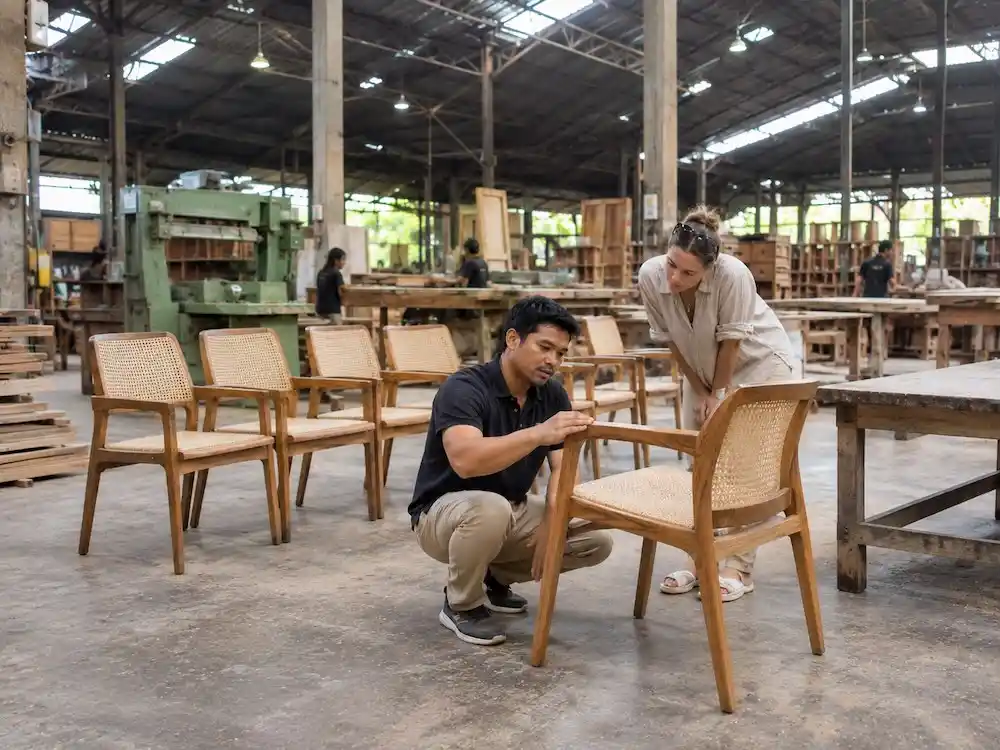
Finding a furniture supplier is easy enough in 2026. Finding one that understands your designs, delivers consistent quality, and sticks to agreed timelines is where things get a little trickier.
A big part of successful furniture sourcing for interior designers comes down to choosing suppliers who can handle the specific requirements of each project.
A company that produces beautiful dining tables might not necessarily have the experience or equipment to manufacture 200 upholstered chairs for a hotel.
Before committing to a supplier, there are several things worth checking.
Experience and Previous Projects
Start by looking at the supplier’s previous work. Have they supplied furniture for projects similar to yours? Do they regularly work with interior designers, architects, or hospitality developers?
Ask to see:
- Completed projects: Photographs of furniture they’ve actually supplied, preferably in finished interiors.
- Relevant experience: Previous work involving similar materials, furniture styles, or order quantities.
- Client references: Feedback from designers or businesses they’ve worked with.
- Production capabilities: Whether they manufacture furniture themselves or outsource it to other workshops.
A supplier with experience in commercial furniture production will generally have a better understanding of the quality, consistency, and durability required for larger projects.
Customization and Material Options
Not every supplier offers the same level of flexibility. Some only sell furniture from existing collections, while others can manufacture pieces directly from your drawings or reference images.
If you’re looking for custom furniture for interior designers, check whether the supplier can accommodate:
- Custom dimensions and furniture designs
- Different wood species, fabrics, and finishes
- Specific upholstery and cushion requirements
- Prototype development and sample approval
- Matching furniture across multiple rooms or spaces
This is particularly important for designers working on luxury villas, hotels, and restaurants, where standard furniture dimensions or finishes may not suit the overall design.
Quality Standards and Manufacturing Processes
Furniture can look fantastic in photographs and still disappoint when it arrives. That’s why it’s important to understand how a supplier checks quality throughout production.
For custom orders, ask about their material selection, construction methods, finishing process, and final inspections.
If you’re sourcing furniture from manufacturers overseas, requesting progress photographs, videos, or third-party inspections can help you keep track of production without needing to visit the factory yourself.
Pricing, Minimum Orders, and Lead Times
When comparing furniture suppliers for interior designers, don’t focus entirely on the quoted price. You also need to understand what’s included and whether the supplier can meet your project’s schedule.
| What to check | Why it matters |
|---|---|
| Unit pricing | Helps compare furniture costs between suppliers |
| Minimum order quantities | Determines whether the supplier can accommodate your project size |
| Production lead times | Helps you plan around installation and project deadlines |
| Payment terms | Clarifies deposits and when remaining payments are due |
| Shipping terms | Establishes who handles freight, insurance, and delivery costs |
| Warranty and after-sales support | Explains how defects or damaged items will be handled |
A slightly higher quotation may be worth considering if it includes better materials, stronger quality control, or more reliable production timelines.
Communication and Reliability
Good communication is often overlooked when choosing a furniture supplier, but it can make a significant difference once production begins.
You want a supplier who responds clearly, understands technical drawings, raises potential problems early, and provides realistic updates rather than promising everything will be finished next week.
This becomes even more important when working with wholesale furniture suppliers or international manufacturers, where time differences, shipping arrangements, and production schedules can make last-minute changes difficult.
💡 Ultimately, the right furniture supplier isn’t necessarily the cheapest or the biggest. It’s the one that can consistently produce what your project needs, at an agreed price, within a realistic timeframe.
Custom vs Ready-Made: Which Is Better for Interior Designers?
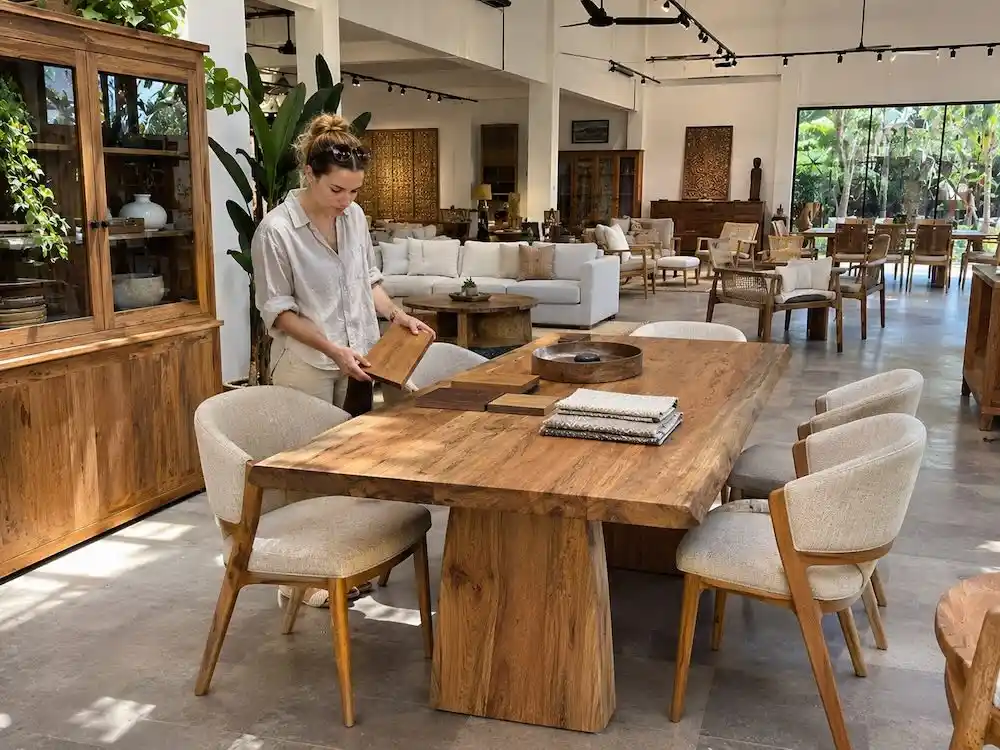
One of the biggest decisions when sourcing furniture for an interior design project in 2026 is whether to choose ready-made pieces or have furniture manufactured specifically for the space.
Both options have their advantages. Ready-made furniture is convenient and often available for immediate purchase, while custom manufacturing gives designers greater control over dimensions, materials, finishes, and overall design.
The right choice usually comes down to your project’s budget, timeline, and how much flexibility you need.
When Ready-Made Furniture Makes Sense
Ready-made furniture works well when you’re happy with existing designs and don’t need to make major changes to dimensions or materials.
It’s often the more practical option for:
- Smaller residential projects: When you only need a handful of furniture pieces.
- Tight deadlines: When furniture is available from stock and can be delivered quickly.
- Limited budgets: When standard furniture meets the project’s requirements without customization.
- Individual statement pieces: When a particular designer collection or branded product is part of the concept.
The main limitation is flexibility. You might find a sofa with the perfect design but the wrong dimensions, or a dining chair that’s comfortable but unavailable in the finish you need.
When Custom Furniture Manufacturing Is the Better Choice
For projects with specific design requirements, working directly with a manufacturer can offer considerably more freedom.
Rather than designing a room around furniture that’s already available, you can have pieces made to suit the space.
Custom furniture manufacturing is particularly useful when you need:
- Specific dimensions: Furniture designed to fit unusual layouts or limited spaces.
- Matching materials and finishes: Consistent furniture across bedrooms, dining areas, and shared spaces.
- Original designs: Pieces manufactured from your own drawings, sketches, or reference images.
- Larger quantities: Multiple identical items for hotels, resorts, restaurants, or commercial interiors.
- Commercial durability: Materials and construction suited to frequent use.
Custom manufacturing does require more planning. You’ll need to allow time for quotations, material approvals, production, and delivery. For more complicated designs, prototypes may also be necessary before full production begins.
Custom vs Ready-Made Furniture: A Quick Comparison
| Factor | Custom-Made | Ready-Made |
|---|---|---|
| Design flexibility | High | Limited |
| Dimensions | Made to specification | Standard sizes |
| Materials and finishes | Wide range of options | Usually predetermined |
| Lead times | Requires manufacturing | Often faster if in stock |
| Pricing | Depends on design and quantity | Usually fixed |
| Bulk orders | Suitable for repeat production | Depends on stock availability |
| Quality control | Can be specified during production | Depends on the brand or supplier |
Can Interior Designers Combine Both Options?
Absolutely. In fact, combining custom and ready-made furniture is often the most practical approach.
For example, an interior designer furnishing a luxury villa might commission custom beds, wardrobes, dining tables, and outdoor furniture while purchasing lighting, occasional chairs, and decorative accessories from established brands.
This approach allows designers to invest in custom pieces where dimensions, materials, or design consistency matter most, without having to manufacture every single item.
For larger hospitality projects, furniture sourcing for interior designers often involves finding the right balance between custom manufacturing and ready-made products. The goal is to achieve the intended design while keeping costs, quality, and delivery schedules under control.
Understanding Trade Pricing and Wholesale Furniture Costs
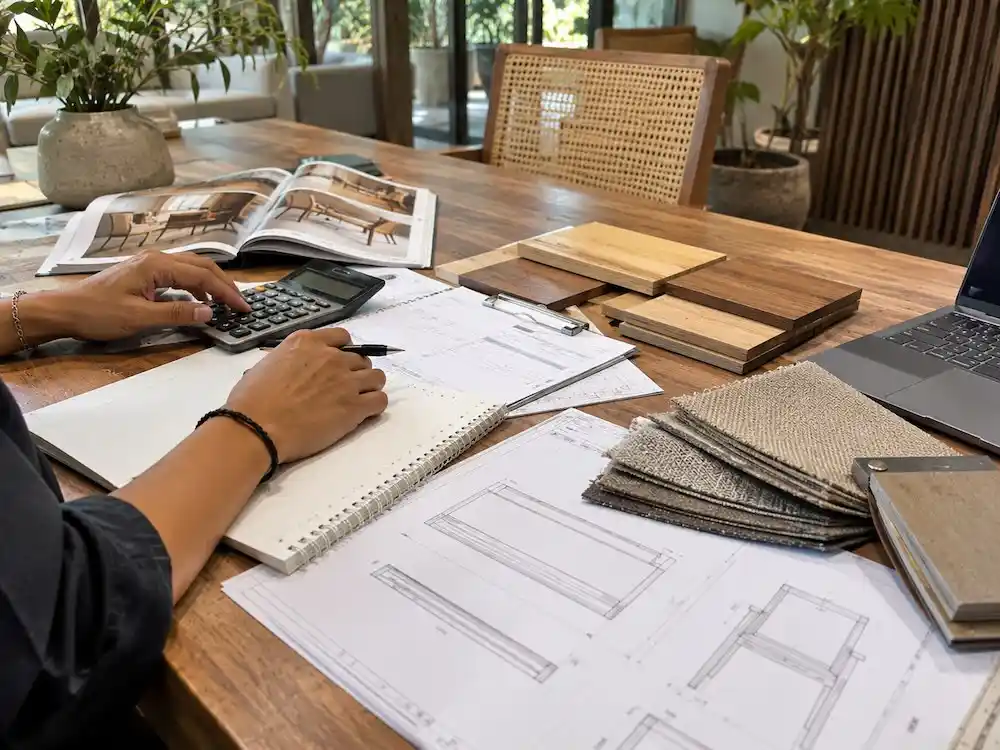
Furniture pricing can vary quite a bit depending on where you buy, how much you order, and whether the pieces are ready-made or custom-manufactured.
For example, a dining chair purchased from a retail showroom might cost considerably more than a similar chair ordered directly from a manufacturer in larger quantities.
Understanding how trade pricing works is an important part of furniture sourcing for interior designers, especially when managing client budgets or purchasing furniture for larger projects.
How Does Trade Pricing Work for Interior Designers?
Many furniture brands, wholesalers, and manufacturers offer special pricing to interior designers and other industry professionals. These are commonly known as trade prices and are usually lower than standard retail prices.
However, trade pricing isn’t the same everywhere. Some suppliers offer fixed discounts, while others calculate prices based on the quantity and specifications of each order.
Common pricing arrangements include:
- Trade discounts: Reduced prices offered to registered interior designers and design businesses.
- Wholesale pricing: Lower unit prices for furniture purchased in larger quantities.
- Manufacturer-direct pricing: Quotations provided directly by the factory without additional retail markups.
- Project-based pricing: Custom quotations based on the furniture designs, materials, quantities, and overall project requirements.
For larger projects, requesting a complete furniture quotation is often more useful than comparing individual product prices.
What Affects the Cost of Furniture?
Even when working directly with furniture manufacturers, two pieces that look almost identical can have very different prices.
Several factors influence how much you’ll pay:
| Cost factor | How it affects pricing |
|---|---|
| Materials | Solid teak, oak, metal, rattan, and upholstery fabrics have different costs |
| Design complexity | Curved shapes, detailed carving, and complicated joinery require more work |
| Order quantity | Larger production runs can reduce the cost per piece |
| Dimensions | Larger furniture generally requires more materials and labor |
| Finishes | Specialist coatings, stains, and custom colors can increase costs |
| Customization | Unique designs may require additional development or prototypes |
| Packaging and shipping | Export packaging, freight, and delivery add to the final cost |
For example, ordering 100 identical dining chairs may be more cost-effective per chair than ordering five different designs in quantities of 20.
Producing the same design repeatedly allows manufacturers to organize materials and production more efficiently.
Is Buying Furniture Directly from Manufacturers Cheaper?
It certainly can be, particularly for larger orders. Buying directly from a manufacturer removes some of the markups associated with distributors, wholesalers, and retail showrooms.
However, lower factory prices don’t automatically mean lower overall costs.
When sourcing furniture internationally, you may also need to account for:
- International freight and shipping insurance
- Export packaging and handling
- Import duties and local taxes
- Customs clearance and port charges
- Transportation and installation at the project site
These additional expenses should be included when comparing quotations from local and overseas suppliers.
How to Keep Furniture Sourcing Within Budget
Furniture Sourcing Cost Calculator
Estimate your total furniture order cost, including shipping, import duties, and additional charges. Adjust the figures to match your project.
This calculator provides an illustrative estimate, not a supplier quotation. Import duty is calculated on the furniture subtotal for simplicity. Actual customs calculations may include freight, insurance, taxes, and other charges depending on the destination. Confirm applicable rates and costs before ordering.
Good budgeting isn’t necessarily about choosing the cheapest furniture. It’s about knowing where to spend more and where you can save without compromising the overall design.
For interior designers managing larger projects in 2026, a few practical approaches can make a difference:
- Combine orders: Source multiple furniture items from the same manufacturer where practical.
- Standardize materials: Use matching wood species, fabrics, and finishes across different pieces.
- Review quantities early: Larger orders may qualify for better unit pricing.
- Simplify complicated designs: Small adjustments to construction or detailing can sometimes reduce manufacturing costs.
- Allow for unexpected expenses: Keep some room in the budget for shipping changes, replacement items, or additional requirements.
Successful furniture sourcing for interior designers isn’t about finding the lowest price on every item. It’s about getting the right quality, design, and service for the money available, while making sure the final costs don’t come as a surprise.
Sourcing Furniture for Hotels, Resorts, and Luxury Villas

Furniture sourcing for hospitality projects comes with a different set of challenges compared to furnishing a private home.
Hotels, resorts, and luxury villas often require larger quantities, matching designs across multiple rooms, and materials that can handle frequent use without wearing out too quickly.
For interior designers working on these projects, finding the right furniture is only part of the job. You also need to make sure everything arrives on time, meets the required quality standards, and fits the overall design concept.
What Makes Hospitality Furniture Sourcing Different?
Unlike smaller residential projects, hospitality interiors need to balance appearance, comfort, durability, and practical use.
A beautiful dining chair might look perfect in a showroom, but that doesn’t necessarily mean it’s suitable for a busy hotel restaurant.
When sourcing furniture for hospitality projects as an interior designer, you should consider:
- Commercial durability: Furniture needs to withstand frequent use, cleaning, and movement.
- Design consistency: Guest rooms, villas, and shared spaces often require matching furniture, materials, and finishes.
- Order quantities: Larger projects may need dozens or hundreds of identical pieces.
- Maintenance: Materials and finishes should be easy to clean, repair, or replace.
- Project timelines: Furniture production and delivery must fit around construction and opening schedules.
- Replacement availability: Hotels may need additional matching pieces several years after the original order.
These requirements make supplier selection especially important, particularly when ordering custom furniture in larger quantities.
Why Custom Furniture Is Popular for Hospitality Projects
Many interior designers prefer working directly with manufacturers for hotel and resort projects because ready-made furniture doesn’t always meet the required specifications.
Custom manufacturing allows designers to create furniture around the property’s layout, design style, and intended use.
For example, a beachfront resort might require teak outdoor loungers, custom upholstered headboards, solid wood dining tables, and rattan lounge chairs, all produced with matching finishes across different areas of the property.
Working with furniture manufacturers for interior designers can also make it easier to coordinate these pieces under one production schedule rather than managing separate orders from multiple retailers.
Sourcing Furniture for Luxury Villas
Luxury villa projects often involve smaller quantities than hotels, but they can require just as much attention to detail.
Designers may need furniture made to fit unusual room dimensions, open-plan living areas, or outdoor spaces exposed to tropical weather.
Common furniture requirements include:
- Bedrooms: Custom beds, bedside tables, wardrobes, and upholstered headboards.
- Living areas: Sofas, coffee tables, lounge chairs, and storage cabinets.
- Dining spaces: Custom dining tables, chairs, bar stools, and sideboards.
- Outdoor areas: Sun loungers, daybeds, outdoor dining sets, and poolside furniture.
- Decorative pieces: Console tables, benches, mirrors, and handcrafted accents.
For projects with a strong design identity, sourcing custom furniture can help create a more consistent look throughout the property.
Managing Large Furniture Orders
One of the biggest challenges in hospitality furniture sourcing is keeping everything organized when dealing with multiple furniture types, suppliers, and delivery schedules.
A practical approach is to group furniture by room type or project area, then confirm quantities and specifications before production begins.
For example, a 50-room hotel might require the same bed frame, bedside tables, desk, and lounge chair in every guest room. Approving one complete room’s furniture before producing the remaining quantities can help identify design or quality issues early.
Furniture sourcing for interior designers becomes much easier to manage when specifications are clear, samples are approved, and manufacturers provide regular production updates.
For larger projects, it’s also worth discussing phased deliveries, spare furniture quantities, and replacement orders before manufacturing begins. These details might seem minor during the design stage, but they can save considerable time once the property is operating.
Furniture Sourcing Mistakes Interior Designers Should Avoid
Even experienced interior designers can run into problems when sourcing furniture, especially when working with new suppliers or managing several orders at once.
A small mistake with dimensions, materials, or delivery dates can quickly turn into an expensive problem.
From our experience working on custom furniture projects, many of these issues can be avoided with better preparation and clearer communication.
Here are some of the most common mistakes to watch out for in 2026:
- Choosing furniture based on photos alone: Product images don’t always show the true quality, finish, or construction. Request material samples, detailed specifications, or physical prototypes before placing larger orders.
- Providing unclear specifications: A reference photo isn’t enough for custom manufacturing. Include dimensions, materials, finishes, quantities, and technical drawings to avoid misunderstandings.
- Choosing the cheapest supplier: A lower price might mean cheaper materials, weaker construction, or fewer quality checks. Compare what’s actually included in each quotation rather than focusing entirely on price.
- Underestimating lead times: Custom furniture production, shipping, and customs clearance all take time. Confirm realistic schedules and allow some flexibility for unexpected delays.
- Overlooking additional costs: Freight, export packaging, import duties, and local delivery can significantly increase your final expenses. Always calculate the estimated total cost before confirming an order.
- Skipping quality inspections: Incorrect dimensions, inconsistent finishes, or manufacturing defects are much easier to resolve before furniture leaves the factory.
- Working with too many suppliers: Managing several manufacturers can complicate communication, quality control, and deliveries. Where practical, consider suppliers capable of handling multiple furniture categories.
- Forgetting about future replacements: Hotels, resorts, and rental villas will eventually need replacement furniture. Keep records of approved designs, materials, and finishes so matching pieces can be reproduced later.
One of the simplest ways to improve furniture sourcing for interior designers is to address these potential problems before placing an order.
Taking a little extra time to check specifications, confirm expectations, and choose reliable suppliers can prevent much bigger headaches once production begins.
Custom Furniture Sourcing for Interior Designers with Muebles Asia
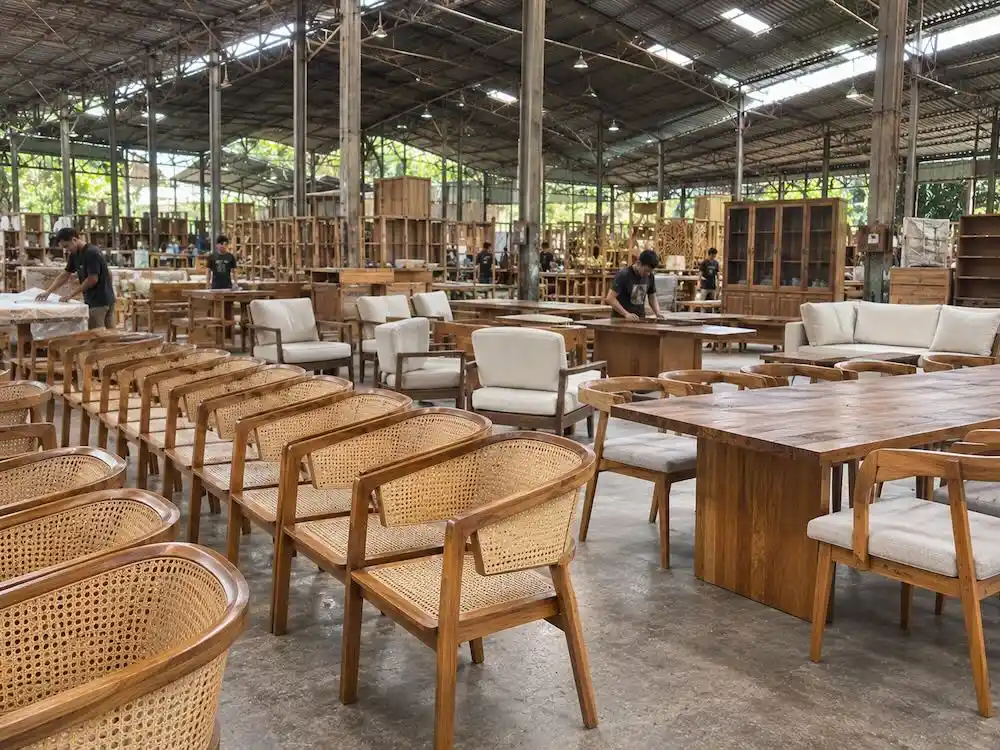
At Muebles Asia, we work directly with interior designers, architects, and project developers to manufacture custom furniture for hotels, luxury resorts, private villas, restaurants, and commercial spaces.
Based in Bali, with our furniture factory in Jepara, Indonesia, we help designers turn their ideas into finished furniture.
Whether you’re working from detailed technical drawings, reference photographs, or an existing design concept, we can manufacture pieces to suit your project’s dimensions, materials, and preferred finishes.
Our furniture manufacturing services include:
- Custom furniture production: Beds, dining tables, chairs, sofas, cabinets, outdoor furniture, and more, manufactured to your specifications.
- Wide range of materials: Solid teak, other hardwoods, rattan, metal, upholstery, and a variety of finishing options.
- Furniture for hospitality projects: Coordinated furniture production for hotels, resorts, restaurants, and luxury villas.
- Wholesale and bulk orders: Manufacturing larger quantities while maintaining consistent designs, materials, and finishes.
- International furniture supply: Export packaging and shipping coordination for overseas projects.
We understand that furniture sourcing for interior designers involves more than simply placing an order. You need a manufacturing partner who understands your designs, communicates clearly, and can deliver furniture that meets your project’s requirements.
Have a furniture project in mind? Take a look at our completed projects to see what we manufacture, or contact Muebles Asia to discuss your designs, quantities, and requirements.
FAQs About Furniture Sourcing for Interior Designers
Where do interior designers buy their furniture?
Interior designers buy furniture from manufacturers, wholesale suppliers, trade showrooms, furniture brands, and independent workshops. The choice depends on the project’s budget, design requirements, and order quantities. For custom furniture or larger commercial projects, many designers prefer working directly with manufacturers.
How do interior designers find reliable furniture suppliers?
Finding reliable suppliers is an important part of furniture sourcing for interior designers. Most start with industry recommendations, online research, trade shows, and manufacturer portfolios. Before ordering, check previous projects, request material samples, and confirm the supplier’s manufacturing capabilities and delivery timelines.
Can interior designers buy furniture directly from manufacturers?
Yes. Interior designers can purchase furniture directly from manufacturers, often with the option to customize dimensions, materials, and finishes. Companies such as Muebles Asia manufacture custom furniture for interior designers working on residential, hospitality, and commercial projects.
Do interior designers get wholesale furniture prices?
Yes, many furniture suppliers offer trade or wholesale pricing to professional interior designers. Discounts depend on the supplier, order quantities, and furniture specifications. Purchasing directly from manufacturers can also provide competitive pricing, particularly for larger orders.
Can interior designers order custom-made furniture?
Absolutely. Interior designers can commission custom furniture using technical drawings, sketches, reference photographs, or detailed specifications. Custom furniture manufacturers such as Muebles Asia can produce pieces with specific dimensions, materials, upholstery, and finishes to match a project’s design requirements.
What is the difference between furniture sourcing and furniture procurement?
Furniture sourcing involves finding suitable suppliers, comparing furniture options, and selecting products for a project. Furniture procurement covers the wider purchasing process, including quotations, purchase orders, payments, production tracking, shipping, and delivery coordination.
Can interior designers source furniture internationally?
Yes. International furniture sourcing for interior designers is common, particularly for custom manufacturing and larger hospitality projects. Countries such as Indonesia, Vietnam, China, and Italy offer different furniture manufacturing options. Designers should account for production timelines, international shipping, import duties, and quality inspections.
What should interior designers ask a furniture manufacturer before ordering?
Ask about manufacturing capabilities, available materials, minimum order quantities, production lead times, quality control, and payment terms. When sourcing furniture from manufacturers overseas, also confirm export packaging, shipping arrangements, and how damaged or defective items will be handled.
Is it cheaper for interior designers to buy furniture wholesale?
Wholesale furniture can be cheaper per piece, especially when purchasing larger quantities. However, furniture pricing depends on materials, customization, order size, and delivery costs. Comparing total project costs is more useful than looking at wholesale discounts alone.
What information does a furniture manufacturer need from an interior designer?
Manufacturers typically need furniture dimensions, quantities, preferred materials, finishes, upholstery details, and reference images or technical drawings. A complete furniture specification list helps suppliers prepare accurate quotations and reduces the risk of mistakes during production.
How long does custom furniture manufacturing take?
Custom furniture manufacturing timelines depend on design complexity, materials, order quantities, and factory capacity. Simple pieces may take a few weeks, while larger hotel or resort orders can require several months. International shipping and customs clearance should be factored into the project schedule.
Can one manufacturer supply furniture for an entire hotel or villa?
Yes. Some furniture manufacturers can produce bedroom, living room, dining, and outdoor furniture for an entire property. Muebles Asia supplies custom furniture for hotels, resorts, and luxury villas, helping interior designers coordinate multiple furniture requirements through one manufacturer.